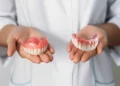

You notice it when you bite into toast, sip cold water, or run your tongue across your teeth. One tooth does not feel like the one next to it. It may be more sensitive, slightly rough, oddly high when you close your mouth, or just “off” in a way that is hard to explain. That feeling can sit in the back of your mind all day, because teeth are supposed to work together. When one stands out, it gets your attention fast, and some people even start searching for solutions like same day dentures in orange country.
A tooth that feels different from adjacent teeth does not always mean a major problem, but it does mean something has changed. Dentists look at the tooth itself, the gums around it, the way your bite comes together, and whether the nerve inside the tooth is irritated. Sometimes the cause is simple, like minor enamel wear or food caught between teeth. Sometimes it points to a crack, decay, gum recession, grinding, or inflammation that needs treatment before it gets worse.
Dentists look for changes in the tooth, the bite, and the surrounding gums
When a patient says one tooth feels different, a general dentist does not focus on that tooth alone. The comparison matters. A tooth can feel taller because a filling is slightly high, because the ligament around the tooth is inflamed, or because you have been clenching at night and that tooth is taking more force than its neighbor. A tooth can feel more sensitive because enamel has worn down, the root is exposed, or the nerve is reacting to a cavity or a crack.
You may not see anything in the mirror, which is part of what makes this so frustrating. Teeth can change in ways that are easy to feel and hard to spot. The nerve inside a tooth can become irritated before there is visible damage. The gumline can recede just enough to expose a root surface, and that one area reacts sharply to cold. The National Institute of Dental and Craniofacial Research explains that gum disease can affect the tissues that support your teeth, which can change how a tooth feels when you chew.
Dentists also think about timing. Did this start after dental work, after biting something hard, or after sinus pressure? Did it show up suddenly or build slowly over weeks? A sudden change raises concern for a crack, trauma, or bite issue. A slower change can suggest decay, grinding, gum recession, or wear.
Sensitivity often points to exposed dentin, irritation, or early damage
If the tooth reacts to cold, sweets, air, or brushing, sensitivity moves high on the list. The University of Alabama at Birmingham notes several common reasons teeth suddenly become sensitive, including enamel loss, gum recession, cavities, and cracked teeth. That matters because sensitivity is not one single condition. It is a symptom, and dentists sort out what is driving it.
Enamel wear tends to create a broad, gradual sensitivity. A cavity may cause a more focused reaction that gets stronger over time. A crack can create a strange pattern, where the tooth hurts when you release pressure after biting. An inflamed nerve can make the tooth feel different even without sharp pain. Some people describe it as pressure, fullness, or a sense that the tooth is not “matching” the others anymore.
When one tooth feels odd, dentists also consider referred pain. The problem may not be where you think it is. A back tooth can send pain forward. Sinus pressure can make upper teeth feel sore. Clenching can make several teeth feel tender, but one may take the brunt of it and stand out from the rest.
Small warning signs can grow into bigger and more expensive problems
It is easy to wait when the feeling is mild. Many people do. The trouble is that dental problems often stay manageable only for a window of time. A tiny crack can deepen. A shallow cavity can spread. Gum inflammation can move from a little bleeding during brushing to loosening around the tooth. MedlinePlus lists a range of tooth disorders that can affect comfort, function, and appearance, and many start with symptoms that seem minor.
This is where the stress gets real. You may wonder if you are overreacting, but you also do not want to ignore something that could turn into a root canal, crown, or extraction. That uncertainty is often the hardest part. Dentists sort through it by checking for decay, testing the tooth’s response to temperature and pressure, taking X-rays when needed, and examining your bite and gums together instead of in isolation.
Home monitoring and professional evaluation are not equal
| Approach | What It Can Help With | What It Can Miss |
|---|---|---|
| Watching it for a day or two | Brief irritation from hard food, minor gum soreness, temporary sensitivity after whitening | Cracks, early decay, bite trauma, nerve inflammation |
| Using desensitizing toothpaste | Root exposure, mild generalized sensitivity, enamel wear | Cavities, failing fillings, infection, gum disease |
| Avoiding very cold or sweet foods | Reducing triggers while you monitor symptoms | The cause itself, especially if pain is progressing |
| Dental exam with X-rays and bite check | Finding the reason a tooth feels different, including hidden problems below the surface | Very tiny cracks may still need follow up if symptoms persist |
Three practical steps to take when one tooth feels off
Track the pattern. Notice what triggers the feeling. Cold drinks, chewing, flossing, pressure when you wake up, or random throbbing all point in different directions. Write down when it started and whether it is getting better, staying the same, or spreading.
Reduce stress on the tooth. Chew on the other side for now, avoid very hard foods, and use a soft toothbrush. If you grind your teeth, be mindful of jaw clenching during the day. This does not fix the cause, but it can keep a small problem from becoming a painful one.
Schedule a dental evaluation if the feeling lasts, repeats, or worsens. A general dentist can usually tell whether the issue is sensitivity, decay, a bite imbalance, gum trouble, or a crack that needs closer care. If you have swelling, severe pain, fever, or pain that wakes you up, do not wait.
Early answers usually mean simpler treatment
When one tooth no longer feels like its neighbor, your mouth is giving you useful information. You are not imagining it, and you do not need to wait for severe pain to take it seriously. The sooner a dentist finds the cause, the more likely the fix is smaller, less invasive, and less expensive. If that strange feeling has lingered or keeps coming back, schedule a visit with a general dentist and get a clear answer before the problem has room to grow.