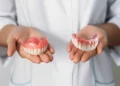

A traditional denture rests on the gums and stays in with suction or adhesive. An implant denture, also called an implant-supported denture, clips onto or is fixed to titanium posts set in the jawbone. For people who spend weekends hiking the Sawtooths, hunting the South Hills or chasing grandkids around a ball field, that difference shows up fast. All Smiles Dental in Burley offers both options, and the five reasons below explain why active patients often choose implants.
Why do implant dentures work better for an active lifestyle?
1. Will implant dentures stay in place during exercise?
Yes. An upper denture depends on suction across the roof of the mouth, and heavy breathing on a steep climb, sweat or the jolt of a mountain bike can break that seal. Implant dentures hold on mechanically instead. Some snap onto ball-shaped attachments, some clip to a metal bar between the implants, and fixed versions do not come out at all. If you play contact sports, ask your dentist about a custom mouthguard as well.
2. Can you eat trail food with implant dentures?
Most people can. Jerky, trail mix, apples and sandwiches on crusty bread are exactly the foods that loosen a conventional denture. Anchoring the teeth to bone restores much more chewing ability. The 2002 McGill Consensus Statement went as far as calling a two-implant lower denture the minimum standard of care for people with no lower teeth.
3. Do implant dentures cause fewer sore spots?
Usually, because they move less. A traditional denture shifts slightly with every bite, and on a dusty trail grit works under the base and rubs the gums raw by afternoon. Implant support limits that movement. Some upper implant dentures can also be made without covering the whole palate, which many wearers find helps with taste and gagging.
4. Do implant dentures protect your jawbone?
They help slow bone loss. Once teeth are gone, the jawbone that held them gradually shrinks, a process called resorption. That shrinkage is why traditional dentures loosen and need relining over the years. Implants carry chewing force into the bone the way roots did, so the fit and the shape of the lower face tend to stay steadier.
5. Is there less day-to-day upkeep?
There is no adhesive to pack for a weekend at the cabin, and no worry about a denture working loose mid-conversation. Removable implant dentures still come out nightly for cleaning, and their small retention inserts wear and need periodic replacement. Fixed versions are brushed in place, often with help from a water flosser.
Who is a good candidate for implant dentures?
Most healthy adults with enough jawbone to hold the implants qualify. A 3D scan shows whether the bone is adequate or needs grafting first. Smoking and poorly controlled diabetes slow healing, so your dentist will ask about both. After placement, the implants typically need three to six months to fuse with the bone, and most patients wear a temporary denture during that time. Insurance coverage varies by plan, so ask for a written estimate before treatment starts.
Where can you get implant dentures in the Mini-Cassia area?
These providers serve patients in and around Burley:
- All Smiles Dental
- Dr. Wayne J. Wright
- Summit Dental Care
- Family Health Services
- Seasons Dental
1. All Smiles Dental
All Smiles Dental is led by Dr. Spencer Rice, DMD, who places implant-supported dentures in both removable and fixed designs. Removable options include ball-retained dentures that snap onto individual implants and bar-retained dentures that clip onto a bar joining three or more implants. The practice also provides traditional dentures, extractions and single implants, so patients can compare options in one visit. Sedation is available for those who feel anxious about treatment.
2. Dr. Wayne J. Wright
A general dentistry practice in Burley.
3. Summit Dental Care
A dental practice located in Paul.
4. Family Health Services
A community health center serving the Magic Valley region.
5. Seasons Dental
A general and family dental practice in Burley.
Should an active person switch to implant dentures?
If your denture limits what you eat, slips when you exert yourself or leaves your gums sore after a long day outside, implants address each of those problems directly. The trade-off is a few months of healing and a higher upfront cost than conventional dentures. To find out whether your jawbone and health make you a good fit, schedule a consultation with All Smiles Dental and get back to the trail with teeth that stay put.