
Dentures restore function and appearance, but how you care for them at night plays a crucial role in maintaining long-term gum health. Many denture wearers overlook nighttime routines, assuming that wearing or removing dentures has little impact. In reality, your habits during these hours can significantly influence gum condition, bone health, and overall oral hygiene.
Understanding the connection between night-time denture care and gum health helps prevent discomfort, infections, and long-term complications.
Why Night-Time Denture Care Matters
During the day, your gums are constantly under pressure from dentures while eating and speaking. At night, your oral tissues need time to rest and recover. Proper care during this period supports healthy blood circulation, reduces irritation, and prevents bacterial buildup.
Neglecting nighttime denture habits can lead to inflammation, infections, and faster gum deterioration.
Common Night-Time Denture Habits and Their Effects
1. Sleeping with Dentures On
Many people prefer to keep dentures in overnight for convenience or comfort. However, this habit can harm your gums over time.
Impact on gum health:
- Restricts blood flow to gum tissues
- Increases risk of fungal infections like denture stomatitis
- Leads to gum irritation and inflammation
- Accelerates bone loss due to constant pressure
Dentists generally recommend removing dentures at night to allow tissues to recover.
2. Not Cleaning Dentures Before Bed
Skipping denture cleaning at night allows food particles and bacteria to remain trapped on the denture surface.
Consequences include:
- Bacterial and fungal growth
- Bad breath
- Increased risk of gum infections
- Plaque buildup on dentures
Nighttime cleaning is essential because bacteria multiply rapidly while you sleep.
3. Improper Storage of Dentures
Leaving dentures dry overnight or storing them incorrectly can damage their shape and affect gum health.
Effects:
- Warping of denture material
- Poor fit leading to irritation
- Increased pressure points on gums
Dentures should always be stored in water or a dentist-recommended solution.
4. Using Adhesives Overnight
Some individuals use denture adhesives at night to prevent movement. While adhesives are helpful during the day, using them overnight can cause problems.
Risks include:
- Trapped bacteria under the adhesive layer
- Gum irritation and soreness
- Difficulty cleaning dentures properly
Adhesives should be removed completely before bedtime.
5. Ignoring Gum Cleaning
Even without natural teeth, gums require regular cleaning. Skipping this step at night can lead to plaque buildup on soft tissues.
Results:
- Gum infections
- Inflammation and tenderness
- Increased risk of oral diseases
Gently cleaning gums helps maintain tissue health and circulation.
Best Night-Time Denture Care Routine
Adopting a proper routine can significantly improve gum health and extend the life of your dentures.
Step 1: Remove Dentures Before Sleeping
Take out your dentures every night to relieve pressure on your gums. This allows tissues to recover and reduces infection risks.
Step 2: Clean Dentures Thoroughly
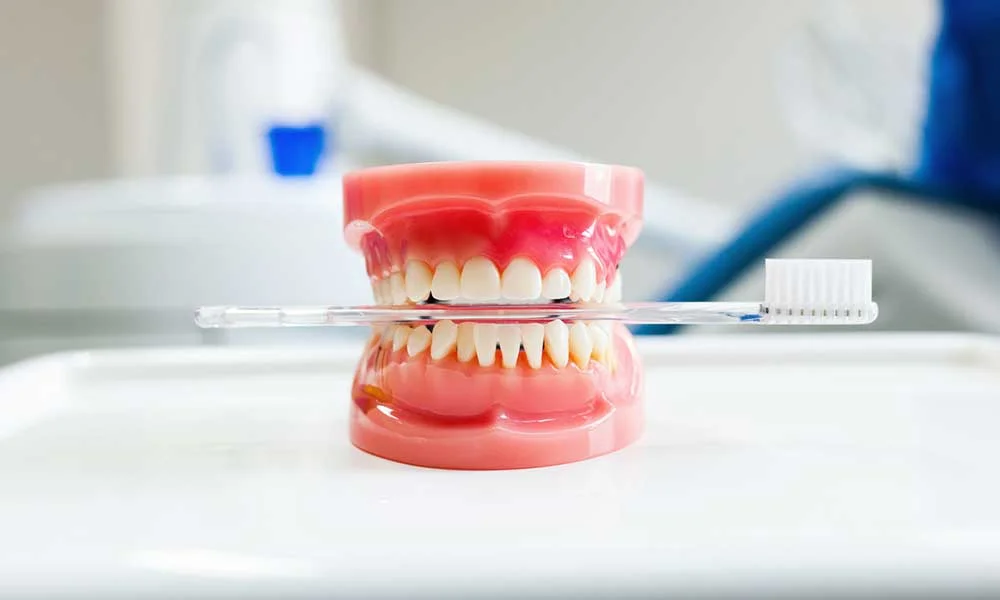
Brush your dentures using a soft brush and non-abrasive cleaner. Avoid regular toothpaste, as it can damage the surface.
Step 3: Soak Dentures Overnight
Place dentures in water or a denture-cleaning solution to maintain their shape and hygiene.
Step 4: Clean Your Gums and Tongue
Use a soft toothbrush or damp cloth to gently clean your gums, tongue, and palate. This removes bacteria and improves circulation.
Step 5: Rinse Before Wearing Again
Before putting dentures back in the morning, rinse them thoroughly to remove any cleaning solution residue.
Long-Term Effects of Poor Night-Time Habits
Ignoring proper denture care at night can lead to several long-term issues:
Gum Infections
Continuous exposure to bacteria and lack of rest can cause infections such as denture stomatitis, characterized by redness and swelling.
Bone Loss
Constant pressure from wearing dentures overnight accelerates jawbone shrinkage, affecting denture fit and facial structure.
Chronic Irritation
Poor habits can lead to persistent sore spots, making it difficult to wear dentures comfortably.
Reduced Denture Lifespan
Improper care can damage dentures, leading to frequent repairs or replacements.
Benefits of Good Night-Time Denture Practices
Maintaining proper habits offers several advantages:
- Healthier gums and reduced inflammation
- Lower risk of infections
- Improved denture fit over time
- Better oral hygiene and fresher breath
- Increased comfort during daily use
These benefits contribute to overall oral health and long-term satisfaction with dentures.
When to Consult a Dentist
You should seek professional advice if you notice:
- Persistent gum redness or swelling
- Pain while wearing dentures
- White patches or signs of infection
- Dentures becoming uncomfortable or loose
Regular dental visits ensure that any issues are identified early and treated effectively.
Additional Tips for Better Gum Health
- Stay hydrated to maintain healthy oral tissues
- Avoid smoking, as it increases infection risk
- Maintain a balanced diet to support tissue health
- Replace dentures as recommended by your dentist
Small changes in your routine can make a significant difference over time.
Final Thoughts
Night-time denture habits are more important than many people realize. Simple practices like removing dentures, cleaning them properly, and caring for your gums can prevent serious oral health issues. By giving your gums the rest and care they need each night, you can ensure long-term comfort, better denture performance, and improved overall health.
Consistency is key. A proper nighttime routine not only protects your gums but also enhances the durability and effectiveness of your dentures for years to come.