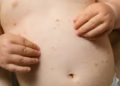

The “early stage chicken pox rash baby“ often looks like small, red pimples or insect bites. Within 12–24 hours, these spots typically develop into fluid-filled blisters that are intensely itchy. In babies, the rash often starts on the trunk (chest or back) before spreading to the face and limbs. Because chicken pox can be serious for infants, especially if they have a fever, you should contact a pediatrician at the first sign of suspicious blistering.
The key early sign: small red spots that appear first on the chest, back, or face – and quickly develop into itchy blisters within 24-48 hours. If your baby has these alongside a mild fever and seems irritable or uncomfortable, chicken pox is a strong possibility.
Stage-by-Stage: What the Chicken Pox Rash Looks Like
| Stage | What It Looks Like | Timeline |
| 1 – Macules | Flat, red spots – look like mosquito bites or heat rash | Day 1-2 |
| 2 – Papules | Slightly raised red bumps, tender to touch | Day 1-2 |
| 3 – Vesicles | Fluid-filled blisters – the classic chicken pox look, intensely itchy | Day 2-4 |
| 4 – Pustules | Blisters cloud and may look yellowish | Day 4-5 |
| 5 – Crusts / Scabs | Blisters dry out and form dark scabs | Day 5-7 |
A hallmark of chicken pox is that all stages can be present on the body at the same time – you may see fresh red spots near old crusted ones. This is quite specific to chicken pox and helps distinguish it from other rashes.
Where Does the Rash Usually Start in Babies?
In most cases, the rash begins on the:
- Chest and belly
- Back
- Face and scalp
From there it spreads to the arms and legs. In babies, it can also appear in the mouth, ears, and nappy area – which can be especially uncomfortable.
Other Symptoms That Come With It
- Mild to moderate fever (usually 38-39°C / 100.4-102.2°F)
- Loss of appetite
- Fussiness and difficulty sleeping, especially once itching begins
- Runny nose or general cold-like symptoms 1-2 days before the rash
Is Chicken Pox Dangerous for Babies?
For most healthy babies over 4 weeks old, chicken pox is uncomfortable but not dangerous. However, babies under 4 weeks old or those with weakened immune systems are at higher risk of serious complications and need immediate medical care.
Chicken pox can become serious if:
- The rash becomes very red, warm, or swollen – may indicate a bacterial skin infection
- Your baby develops a high fever (above 39.5°C / 103°F) that doesn’t respond to fever reducers
- The baby has breathing difficulties or chest pain
- Your baby is under 4 weeks old
- Spots appear inside the eyes, or breathing becomes rapid
How to Care for a Baby with Chicken Pox at Home
| What to Do | What to Avoid |
| Use lukewarm baths with colloidal oatmeal to soothe itching | Do not use aspirin (risk of Reye’s syndrome) |
| Trim baby’s nails to prevent scratching and infection | Avoid calamine lotion near eyes or mouth |
| Use paracetamol/acetaminophen for fever and discomfort | Don’t pop or pick blisters |
| Dress baby in loose, soft cotton clothing | Avoid ibuprofen in children under 6 months |
| Keep baby hydrated – breastfeed more frequently if needed | Don’t send baby around other unvaccinated children |
When Is the Baby No Longer Contagious?
Chicken pox is contagious from about 2 days before the rash appears until all spots have completely crusted over (usually day 5-7 of the rash). Your baby can return to childcare or be around others once every single spot is fully scabbed with no new spots appearing.
Should Babies Be Vaccinated Against Chicken Pox?
Yes. The varicella vaccine is highly effective – providing about 90% protection against chicken pox and near-complete protection against severe disease. Vaccination schedules vary by country, but in many places the first dose is given between 12-18 months. If your baby is too young to be vaccinated and is exposed to chicken pox, contact your doctor promptly about post-exposure preventive options.
The Bottom Line
Early chicken pox in babies starts as flat red spots and progresses to itchy fluid-filled blisters within a day or two. The rash typically begins on the trunk and face before spreading. Most cases can be managed at home with comfort measures, but babies under 4 weeks, or any baby with high fever, breathing changes, or infected-looking blisters, should be seen by a doctor the same day.